What Medical Equipment Should I Have at Home?
A fall in the bathroom, a night of worsening shortness of breath, or a hard week after hospital discharge can change how a home needs to function. When families ask, what medical equipment should I have at home, they are usually not trying to create a mini clinic. They are trying to make daily life safer, calmer, and more manageable for the person they love.
The right answer depends on health needs, mobility, and how much support is available at home. A healthy adult may only need a few basics. Someone living with COPD, sleep apnea, limited mobility, or recovering from surgery may need a more thoughtful setup. The goal is not to fill a room with equipment. It is to make sure the equipment you do have supports comfort, independence, and confidence.
What medical equipment should I have at home for basic safety?
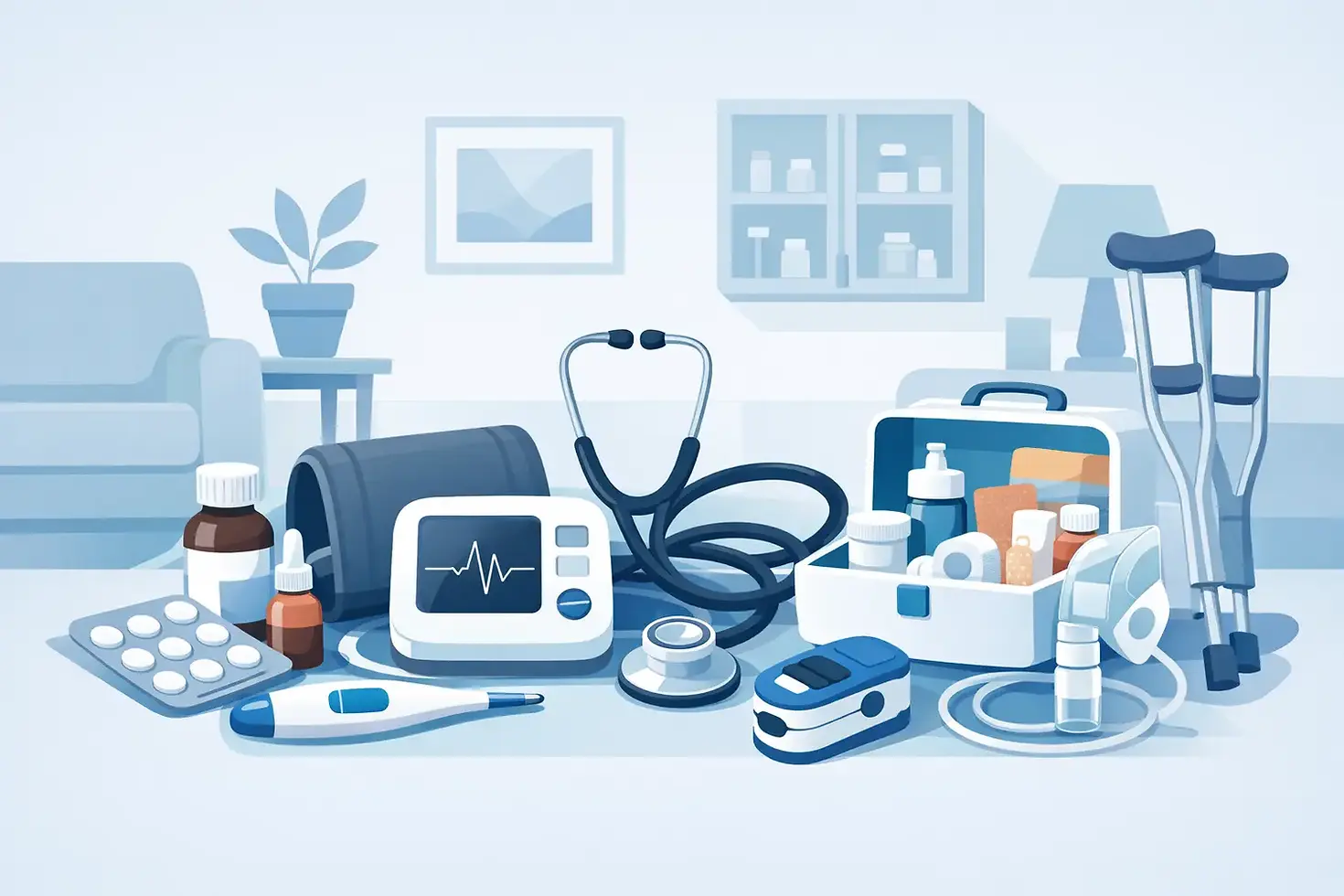
Most homes benefit from a core group of simple items that help with monitoring and everyday care. A digital thermometer is one of the most useful. Fever can be an early sign that something is changing, and having a reliable reading at home helps families decide when to call a provider.
A blood pressure monitor is also helpful, especially for adults with heart disease, high blood pressure, diabetes, kidney disease, or a history of stroke. It gives you more than a single reading at a clinic. It shows patterns over time, which often matters more than one isolated number.
A pulse oximeter can be especially valuable for people with respiratory conditions. For someone living with COPD or another chronic lung condition, checking oxygen saturation may help catch a decline early. That said, numbers should never replace symptoms. If breathing is harder, lips look bluish, or confusion increases, it is time to act even before a device confirms a problem.
A basic first aid kit still matters. Bandages, gauze, antiseptic, medical tape, gloves, and a cold pack cover many common needs. Add a current medication list and emergency contacts nearby. In a stressful moment, small details are easy to forget.
Equipment for breathing support at home
For many families, the most urgent question is not general preparedness but breathing. If someone has COPD, sleep-disordered breathing, chronic respiratory failure, or needs oxygen support, the equipment at home should be chosen carefully and based on medical guidance.
Home oxygen equipment is one of the most common needs. Some patients use oxygen concentrators at home, while others may need portable oxygen systems for outings or appointments. The best setup depends on how much oxygen is prescribed, whether it is needed only during sleep or activity, and how active the patient wants to remain. Comfort and practicality matter here. Equipment that is too difficult to move or use often creates more stress than relief.
Sleep therapy equipment such as CPAP or BiPAP may also be necessary for patients with sleep apnea or certain breathing disorders. These devices can improve sleep quality, reduce strain on the body, and help people feel more alert during the day. But consistent use often comes down to fit, education, and follow-up. A machine alone does not solve the problem if the mask is uncomfortable or the user is unsure how to maintain it.
Some patients need home ventilation support, including non-invasive ventilation. In those situations, having a dependable local provider and clear instruction is just as important as the equipment itself. Caregivers should understand basic operation, cleaning, alarm response, and when to call for help.
Nebulizers can also play an important role for people who use inhaled medications but struggle with handheld inhalers. They are not right for everyone, but they can make respiratory treatment easier during flare-ups or periods of fatigue.
Mobility equipment that protects independence
Mobility equipment is often misunderstood. People sometimes delay it because they worry it means giving up independence. In reality, the right mobility support often protects independence by reducing falls, conserving energy, and making daily routines possible.
A cane or walker may be enough for someone who feels unsteady or tires easily. For others, a manual wheelchair or power wheelchair may be more appropriate, especially if weakness, lung disease, or chronic pain limits how far they can safely move. The best choice depends on the home layout, upper body strength, caregiver support, and how the equipment will be used day to day.
Transfer aids deserve attention too. If getting up from a chair, toilet, or bed has become difficult, the issue is not just convenience. It is safety. Equipment like lift chairs, transfer benches, and bedside commodes can reduce strain on both the patient and the caregiver.
When asking what medical equipment should I have at home, many families focus on dramatic situations. But often, the equipment that changes life most is the equipment that makes ordinary routines less exhausting.
Bedroom and bathroom equipment that makes daily care easier
The bedroom and bathroom are where many home injuries happen, and they are often the spaces where the right equipment makes the biggest difference.
A hospital bed can be helpful for people who need positioning support, easier transfers, head elevation, or pressure relief. Not everyone needs one, but for patients with serious respiratory disease, swelling, weakness, or long recovery periods, an adjustable bed can improve both comfort and care.
A bedside commode may help when walking to the bathroom at night is unsafe. Shower chairs, grab bars, raised toilet seats, and hand-held shower heads can also lower the risk of falls while preserving privacy and dignity. These are not complicated devices, but they often have a major effect on whether someone can manage personal care with less help.
Pressure prevention surfaces, including specialty mattresses or cushions, may also be important for people who spend long periods in bed or in a chair. Skin breakdown can happen faster than families expect, especially when mobility is limited.
Monitoring tools that are useful for ongoing care
Some equipment helps with everyday tracking rather than immediate treatment. A scale may be important for patients with heart failure, kidney disease, or fluid retention. Sudden weight changes can signal trouble before symptoms become severe.
Blood glucose monitors are essential for people managing diabetes at home. For some households, medication organizers, pill cutters, or automated reminders are just as important as larger pieces of equipment. The right home setup is not always the most complex one. It is the one that helps people follow care plans consistently.
If memory changes are part of the picture, consider keeping logs for blood pressure, oxygen readings, glucose, weight, and symptoms in one visible place. That can help both family caregivers and healthcare professionals spot changes earlier.
How to decide what belongs in your home
The safest approach is to match equipment to real risks and routines. Start with three questions. What health conditions are being managed at home? What tasks are becoming hard or unsafe? What would make the person more comfortable and more independent each day?
That process often reveals a better answer than shopping by category. A patient with COPD may need oxygen equipment, a pulse oximeter, and a shower chair because bathing causes shortness of breath. A patient recovering from surgery may need a walker, raised toilet seat, and temporary bed support. A senior living alone may need only a blood pressure monitor, thermometer, and bathroom safety equipment.
There are trade-offs. More equipment can improve safety, but too much can clutter the home and feel overwhelming. Simpler equipment may be easier to use, but it may not meet changing medical needs. This is why guidance matters, especially when respiratory care, sleep therapy, or mobility limitations are involved.
When to ask for professional guidance
If a person is being discharged from the hospital, starting oxygen, struggling with sleep therapy, or having repeated falls, it is worth getting expert input before buying equipment on your own. The right fit, training, and follow-up can make the difference between equipment that helps and equipment that sits unused.
This is especially true for respiratory support. Oxygen and ventilation equipment are not one-size-fits-all, and home safety planning should reflect the person’s diagnosis, prescribed settings, and lifestyle. For families in Northeast Alabama, working with a local provider that understands chronic respiratory needs can make home care feel far less overwhelming.
A well-chosen home setup should support daily life, not take it over. The best equipment is often the equipment that lets someone breathe easier, move more safely, sleep more comfortably, and stay engaged in the routines that still matter most.


Comments