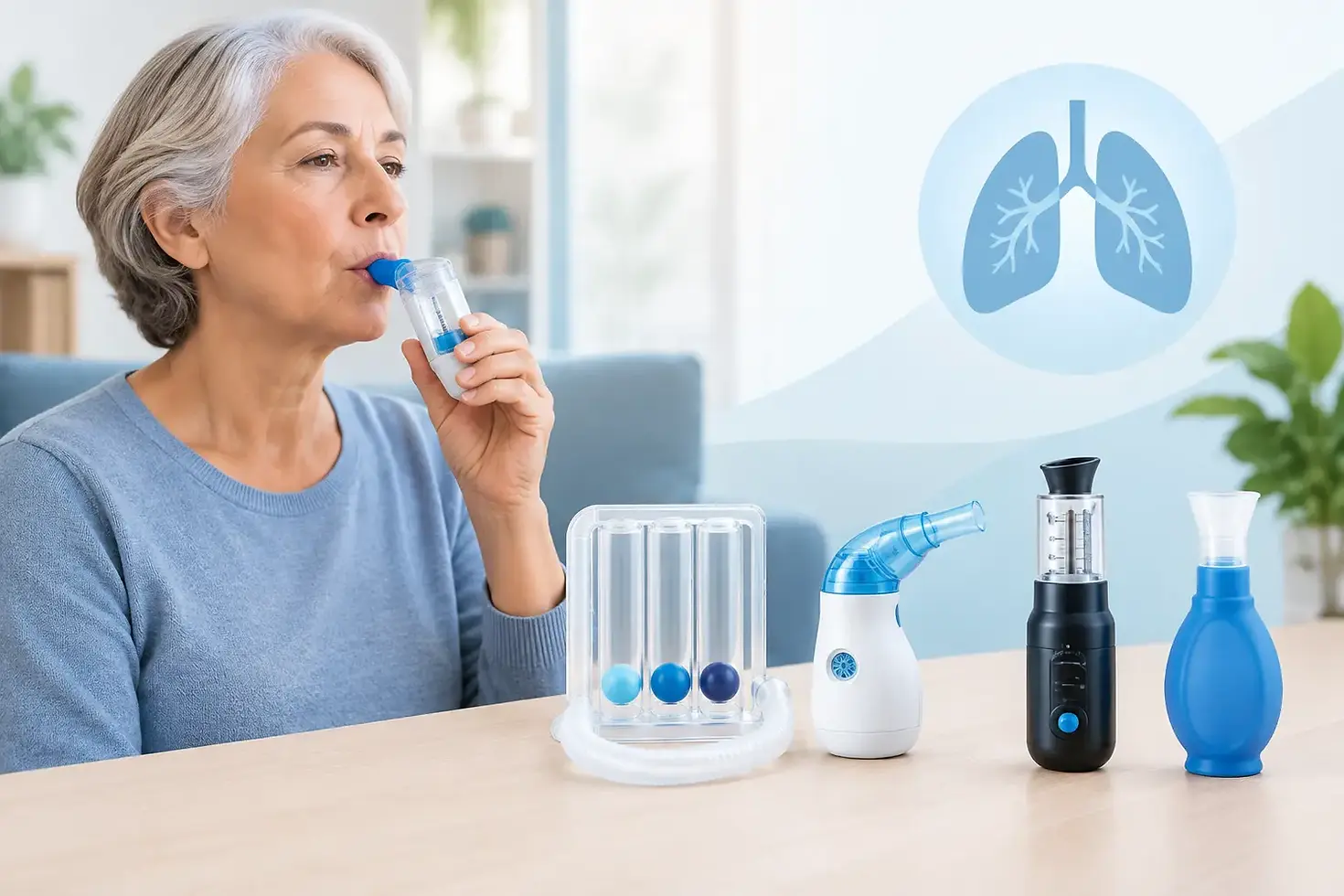
Best COPD Breathing Exercise Devices for Home
Shortness of breath can make even familiar tasks feel uncertain. The best COPD breathing exercise devices are not a replacement for prescribed medication, oxygen, or a care plan, but the right tool may help some people practice breathing techniques, clear mucus, or build confidence between medical visits.
For people living with COPD, the best choice depends on the symptom being addressed. A device that helps loosen mucus will not necessarily strengthen breathing muscles, and a tool that encourages slow inhalation may not be appropriate during a flare-up. Understanding that difference can make home respiratory care feel more practical and less overwhelming.
Start With the Goal, Not the Device
COPD affects people differently. Some people struggle most with thick mucus and coughing. Others notice breathlessness during walking, bathing, or getting dressed. Some are recovering from an illness or hospitalization and need to rebuild stamina under clinical guidance.
Before choosing a breathing device, consider what your healthcare provider wants you to work on: airway clearance, inspiratory muscle training, recovery after a respiratory illness, or daily breathing awareness. A respiratory therapist, pulmonologist, or other qualified clinician can help match the tool to your lung condition, strength, oxygen needs, and current treatment plan.
This matters because more effort is not always better. If an exercise causes dizziness, chest pain, severe wheezing, new confusion, or breathlessness that does not settle with your prescribed rescue plan, stop and seek medical advice promptly.
1. Oscillating Positive Expiratory Pressure Devices
Oscillating positive expiratory pressure devices, often called OPEP devices, are commonly used when mucus is difficult to clear. You breathe out through a handheld mouthpiece. The device creates gentle resistance and vibration during exhalation, which may help move secretions from smaller airways so they can be coughed out more effectively.
For a person with COPD and frequent congestion, this can be a useful addition to a clinician-directed airway clearance routine. The goal is not to force a hard cough repeatedly. Instead, the technique usually combines controlled breaths through the device with a “huff cough,” a purposeful exhale that helps bring mucus upward without exhausting the person.
OPEP devices are small and generally simple to use, but proper technique is essential. Resistance settings, cleaning instructions, posture, and the number of breaths per session all matter. Someone who has had a recent exacerbation, experiences coughing fits, or has certain heart or lung concerns should ask their care team before beginning.
When OPEP may be most helpful
This type of device may fit people who regularly feel chest congestion, have trouble producing mucus, or have been given an airway clearance plan. It is less likely to be the main answer for breathlessness without mucus. Hydration, prescribed inhalers, movement as tolerated, and correct coughing technique may also be part of the plan.
2. Inspiratory Muscle Training Devices
Inspiratory muscle training devices provide resistance as a person breathes in. The purpose is to exercise the muscles used for inhalation, especially the diaphragm and muscles around the rib cage. With a properly selected resistance level and a consistent routine, some people may improve breathing muscle strength and feel more capable during daily activity.
These devices are not the same as a breathing exerciser that simply measures airflow. They are designed to make inhaling more challenging. That is why professional direction is particularly valuable. A resistance level that is too low may not provide meaningful training, while one that is too high can create fatigue, poor technique, or discouragement.
Inspiratory muscle training is often most useful as one part of pulmonary rehabilitation or a personalized home exercise plan. It works best when paired with education about pacing, physical activity, medication use, nutrition, and energy conservation. For example, learning to exhale during effort when standing from a chair or climbing a step can be just as helpful as the device practice itself.
What to ask before starting
Ask whether inspiratory training is appropriate for your stage of COPD, how often to use it, and what symptoms should prompt you to stop. People using supplemental oxygen should also ask whether oxygen should be worn during training and how to monitor exertion safely. Never change an oxygen flow setting for an exercise device unless the prescribing clinician directs you to do so.
3. Incentive Spirometers: Useful in Specific Situations
An incentive spirometer is a handheld device that gives visual feedback while you take a slow, deep breath in. It is widely associated with recovery after surgery or hospitalization, when clinicians may recommend deep-breathing exercises to support lung expansion and reduce complications from shallow breathing.
For stable COPD, an incentive spirometer is not automatically the best choice. COPD commonly involves air trapping, meaning that trying to take repeated maximum breaths can feel uncomfortable or may not address the main issue. Some people may benefit from it when a clinician has specifically included it in a recovery plan, but it should not be treated as a universal COPD exercise tool.
If one has been prescribed, focus on a relaxed, steady inhale rather than a fast, forceful breath. Rest between attempts. A good session should not leave you gasping, lightheaded, or panicked.
4. Breathing Trainers With Visual Feedback
Some simple breathing trainers provide visual feedback on the speed or steadiness of inhalation and exhalation. These can help a person slow down, notice their breathing pattern, and practice control. For someone who becomes anxious when short of breath, visible feedback may make practice feel more concrete.
Still, a device is only as useful as the breathing skill behind it. COPD education often emphasizes pursed-lip breathing: breathe in gently through the nose, then breathe out slowly through lightly pursed lips. This can help keep airways open longer during exhalation and reduce the feeling of air hunger for many people. No equipment is required.
A feedback device may be worthwhile when it encourages regular practice, but it should not turn breathing into a test. The target is calmer, more efficient breathing, not chasing a number on a device.
How to Choose Among the Best COPD Breathing Exercise Devices
The right choice usually comes down to the primary need. An OPEP device may make sense for a person managing mucus. An inspiratory muscle trainer may suit someone who has been evaluated for breathing muscle weakness or is following a pulmonary rehabilitation plan. An incentive spirometer may have a role after surgery or during certain recoveries, while a basic feedback trainer may support guided breathing practice.
Comfort matters, too. A device should be easy to hold, simple to clean, and manageable for someone with arthritis, limited hand strength, or fatigue. Mouthpieces should fit comfortably, and the instructions should be understandable for both the patient and the caregiver.
It is also reasonable to ask who will help if questions arise. Home respiratory equipment works best when patients and families know how to use it correctly, maintain it, and recognize when a symptom needs clinical attention rather than another exercise session.
Build Device Practice Into Everyday COPD Care
Breathing exercises are usually more effective when they are done at a calm, predictable time of day rather than only when symptoms are severe. Sit upright with shoulders relaxed, keep prescribed oxygen in place if directed, and allow time to rest afterward. A caregiver can help by keeping the device clean, noting changes in mucus or breathing tolerance, and encouraging the person without pushing past their limits.
Track what you notice over time. Are you clearing mucus more easily? Can you finish a short walk with fewer pauses? Do you feel more tired after training than expected? These observations give your healthcare team useful information and can help them adjust the plan.
Transcend Medical understands that respiratory care at home is about more than equipment. It is about having dependable guidance that supports comfort, dignity, and the ability to take part in daily life.
A breathing device should leave you feeling supported, not alone with another complicated task. With the right clinical direction and a routine that fits your life, a small tool can become one more steady step toward breathing with greater confidence at home.


Comments